Most Urban Trends For Living That Will Change Cities Around The World For 2026 / 27
Cities have always been mankind’s most intricate and significant invention. They are the place to gather ideas, people potentialities, issues, and challenges in ways that none other type that humans have ever lived in can achieve. The urban world of 2026/27 has been created by a series which are both interesting and threatening: climate pressures demanding fundamental changes in how cities are planned and operated, technology bringing innovative solutions to managing urban complexity, changing patterns of work and mobility impacting the way people interact with city space, and an increasing demand for urban spaces that work better for the people who actually live in them not just those who are passing across or planning to invest in them. The following are the ten most important urban living trends reshaping cities around the world by 2026/27.
1. The 15-Minute City Concept Gains Practical Traction
The notion that city life is to be arranged so that everything residents require every day like work, education shopping, healthcare and green space, as also as the social infrastructure, is accessible in a mere 15 minutes walk or bike ride from home. The concept has moved from the urban planning concept to the practice of a large quantity of major cities. Paris is a popular case, but different versions that incorporate this concept are being implemented across Europe, Latin America, as well as parts of Asia. There are some who have expressed reservations about the potential of such models to restrict movement but the actual goal, designing cities around human scale as well as daily activities, and not dependent on cars, is seeing true mainstream acceptance.
2. Housing Affordability Drives Bold Policies Experiments
The affordability of housing in major cities across the world is at a point where it requires policy solutions far more expansive than those that have been seen in the past. Zoning changes, density bonuses, the requirement of affordable housing to be met and taxation on land values, building social housing on a larger scale and restrictions on leasing platforms for short-term rentals are being implemented in a variety of combinations as cities explore strategies that could meaningfully alter the dial. There is no single approach that has proved universally effective, and the political economy of reforming housing remains highly contestable. However, the realization that inaction is no the best option for the future is creating a degree of policy experimentation, which, with time it’s beginning to bring knowledge.
3. Green Infrastructure Becomes Core Urban Design
Urban greening has evolved as a fashion-conscious afterthought to an essential element of how cities are planning for climate resilience, well-being, and accessibility. Expanding the canopy of trees, green roofs and walls, urban pockets, wetlands, and daylighting of waterways buried in the ground are all being integrated into urban design on an amount that shows the many purposes that green infrastructure performs. It can reduce the urban heat island effect and manages stormwater, improves air quality, promotes biodiversity and brings tangible improvements in mental and physical well-being among urban inhabitants. Cities that made investments in green infrastructure a decade ago are already experiencing results that are accelerating adoption elsewhere.
4. Urban Mobility Changes to Active And Shared Transport
The private car’s dominance of urban spaces is being challenged more seriously than at any prior time. The number of cyclists is increasing rapidly all over Europe and progressively in other regions. E-bikes have been an integral part that enable urban mobility many cities. Public transport investments are increasing as a result of both global climate pledges and the understanding of the fact that car-dependent cities will not function effectively in the midst of the density urban growth demands. The shift isn’t smooth and often contentious. However, the direction is clear: cities are gradually recovering space from private automobiles and then distributing it towards people active travel, active transportation, and other modes of shared mobility.
5. Mixed-Use Development Replacing Single-Use Zoning
The legacy of twentieth-century city planning, which was rigidly divided into residential Industrial, commercial and residential zones, is now being reversed in cities after cities. Mixed-use development, that includes housing, work spaces or retail facilities, as well as hospitality and community amenities within the same areas and buildings generates more livable, walkable economic and sustainable urban environments. This shift is accelerated through the decline of commercial districts with one-use and retail monocultures resulting from changes in shopping and working habits. Business districts that were once dominated by businesses are now being transformed into mixed-use neighbourhoods and development is being required to include a variety kinds of uses right from the start.
6. Smart City Technology Matures Into Practical Application
The smart city concept spent times generating more hype than positive results, with ambitious sensors technology and databases not delivering tangible improvements in urban life. The development of technology and a more sensible method of deployment are creating greater value-added applications. Intelligent traffic management, which reduces emissions and congestion, proactive maintenance systems that fix infrastructure problems prior to malfunctions, live air quality monitoring which informs public health response as well as digital platforms that help make city services more accessible are all proving value in the cities that have implemented them thoughtfully.
7. Urban Food Production Scales Up
Food production in cities is moving from a hobby for rooftops into a key component of the city’s food policy in some of the most innovative municipalities. Vertical farms utilizing controlled environments agriculture produce leafy greens as well as herbs in former warehouses and purpose-built facilities, which use only a tiny fraction of the land and water required by traditional farming. Community growing spaces and school gardens as well as urban orchards serve educational and social purposes in addition to food production. The proportion of a city’s consumed food needs that can be fulfilled by urban production remains limited however the direction of progress, toward less supply chains, increased protection of food and connections between urbanites and food systems, is apparent.
8. Inclusive Design Takes Over The Urban Agenda
The principle that cities ought to be designed in a way that they work for their entire population, which includes disabled and older children, as well as people with limited resources, is gaining more serious attention in urban planning circles. Frameworks for cities that are age-friendly standard for universal design of public spaces and transportation collaboration processes involving minorities in shaping their community, and restrictions on affordability that avoid the exclusion of residents who have lived for a long time from improving areas are all taking more serious consideration. The realization that a city is only designed for disabled, young and the wealthy fails an enormous portion the population it serves is leading to more inclusive ways of the design of urban areas and governance.
9. The Night-Time Economy Becomes Smarter Managed
Cities are paying closer attention to what happens after dark. The night-time economy which encompasses hospitality, entertainment culture, venues for cultural entertainment, as well as the service providers who manage cities during the night represent significant economic activity along with cultural and social value, which has historically been poorly managed. Night-time night mayors and economic commissioners, currently present in cities ranging from Amsterdam to Melbourne can represent the interests night-time businesses and citizens at the same time, facilitating the conflict and crafting a policy that encourages a lively nocturnal city, but without creating a nightmare in the wake of those who need sleep. This framework is already being used for export and is becoming more influential.
10. A sense of belonging And Belonging Drive Urban Renewal
Under the technological and physical elements of urbanization is an issue that is fundamentally social. Most city dwellers and residents, particularly in urban environments that are rapidly changing, experience significant disconnection from their communities. A growing part of urban practice is focused on building this social infrastructure, the community centres, libraries, markets, public spaces, and programing that encourages genuine human connection in urban settings. The most effective urban renewal initiatives of this era are those that integrate improving the physical environment with a steady investing in community development, considering that a neighborhood is most importantly defined by its relationships as much as its physical structures.
Cities will continue to be the primary place where the most pressing challenges of humanity are confronted, and where the most crucial opportunities are pursued. The above trends do not reflect a utopia. And many of the changes that they represent have been contested, limited and unevenly distributed in various urban contexts. But they point to cities which are, in a rising number of areas improving their living conditions eco-friendly, more sustainable, as well as more genuinely flexible to the demands of the people who reside in them. For more insight, browse a few of the leading To find more detail, head to the most trusted uusisuomi24.fi/ to read more.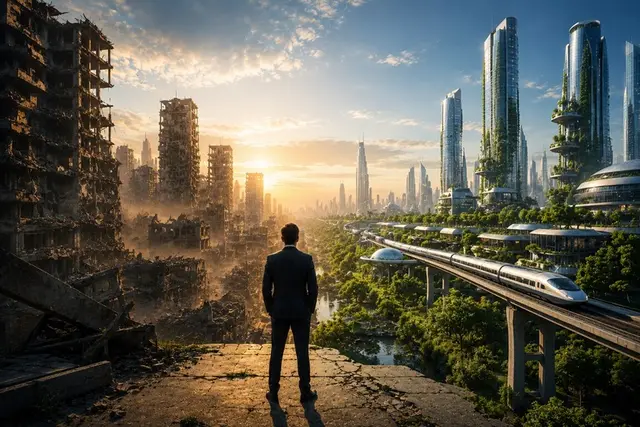
The Top 10 Streaming Trends Dominating Screens In 2026
The entertainment market has experienced more turmoil in the last decade than the decades prior to it, and the rate of change has no signs of stabilizing into a reliable order. The streaming revolution has won the distribution war against traditional broadcasting and physical media, however the era of streaming is maturing into something much more complex, more competitive, and more commercially demanding than its beginning growth stage suggested. At the same time, the form of entertainment itself is evolving with AI, interactivity gaming or social networks blur the boundaries between the different categories of content which were previously distinct. Here are ten of the streaming and entertainment trends that are dominating screens in 2026/27.
1. Consolidation of streams alters the Landscape
The explosion of streaming providers that marked the peak of the battles over streaming has become a phase of consolidation driven by the non-sustainable economics of competing to get subscribers and spending heavily on content. Bundling arrangements, and the slow end of services that may never be scaled up to the point of being viable can reduce the number major players, while making the survivors bigger and more diverse. The consumer benefits of consolidation are less options for subscriptions but higher costs in the aggregate as competitive pressure on prices eases. For the industry there are fewer, but larger commissioning budgets and A more concentrated set gatekeepers to decide what’s produced and read.
2. Ad-Supported Tiers Are Now The Predominant Business Model
The first streaming company to offer a subscription-only model has given way to a more nuanced method in which ad-supported tiers at lower prices draw and retain those price-sensitive subscribers which premium tiers do not have. Ad-supported streaming has become an income stream that is significant, with sophisticated targeting capabilities that make it more valuable to brands than traditional broadcast alternatives. The majority of new subscriber growth across major platforms is heavily concentrated in ad-supported categories, and the proportion of revenue between advertising and subscription fees is shifting in ways that improve the efficiency of streaming in comparison to the traditional broadcast model streaming disrupted initially.
3. AI transforms content production Personalisation
Artificial intelligence is revolutionizing entertainment from both the consumption and production side simultaneously. As for the side of production AI technology is utilized to assist in scriptwriting, visual effects generation with dubbing and localisation music composition, and the creation of artificial performers and environments, which can cut production costs drastically. On the consumption side automated recommendation engines are becoming more sophisticated in their ability identify what viewers are likely to watch, and at what time decreasing the friction in discovery that triggers churn in subscribers. The most debated application is AI-generated content which is marketed as equivalent to human creative work and causing significant discussion about the creative value and attribution as well as fair compensation.
4. Live Sports Remains The Most Valuable Content Categorization
The battle for live sports rights has intensified as streaming platforms have recognized that live sport is one of the categories of content most resistant in the face of time-shifting. It is also more likely to determine subscription preferences and is most effective in making churn less. The major streaming companies have invested enormously in the acquisition of rights to sports across football American basketball, tennis golf, boxing and combat sports. Often, these rights are in competition with traditional broadcasters, but also in partnership with them. The price of premium live-streamed sports rights is growing as the number of financially stable auctioneers increases. For viewers, the sports experience is increasingly fragmented across multiple platforms, resulting in increased costs and the difficulty of observing different sports or competing events.
5. Interactive And Choose-Your-Own-Adventure Formats Evolve
The distinction between passive watching and active participation in entertainment continues blur. These interactive formats allow viewers to control the outcome of stories Multiple-ending releases, companion experiences that connect narrative universes across a variety of formats and levels have all been evolving. Gaming and entertainment are converging across multiple points, from story-driven games with production quality similar to high-end television, to streaming platforms investing in cloud gaming as an interaction layer. The appetite of audiences for entertainment that has a deeper meaning than it simply offers is real, even if the formats that best fulfill it are still being worked out.
6. Podcast And Audio Entertainment Mature Into A Major Sector
Audio entertainment has positioned itself as a growing and significant industry, and not merely a supplementary medium. Podcasting has transformed from an amateur-driven format to professionally produced industries that draw top talent, significant advertising revenues, and significant investment in platforms. Exclusive deals with podcasts producing audio dramas, as well as the conversion process of popular podcasts into films and television properties are all evidence of the medium’s ability to find its commercial traction. While audiobooks are also growing quickly, driven by the same on-demand, screen-free patterns that made podcasting an extremely popular. Audio as a main entertainment medium, not just used as a complement to other activities will soon be able to attract a larger and more devoted listenership.
7. Creator Content Competes Directly With Studio Production
The gap in production quality and audience size between professional studio content and the most creatively-produced content has widened to the point that they are competing for the same audience in the same environments. YouTube, TikTok, and other creator platforms host content that regularly outperforms studio productions in the indicators that are most important for advertisement revenue as well as cultural influence. The streaming and studio platforms are responding by acquiring creator talent, investing in producing models that favor creators, while recognising that the audience relationships created by creators themselves are a type of distribution, and loyalty that isn’t duplicated by conventional marketing efforts. How to define what counts as premium entertainment is being debated in real time.
8. Global Content Breaks Through Language Barriers
The world-wide success of nonEnglish media, as shown through the global success that is Korean series, dramas Spanish thrillers, as well as Scandinavian crime series that has fundamentally changed the way the entertainment industry views the location of development and distribution. The use of AI-powered dubbing and subtitles that preserve vocal performance nuance and make content accessible regardless of language barriers are accelerating the flow of content across borders further. These streaming companies are making investments in local language production in a broader range of markets than they have ever with the intention of serving audience members in the local market and to fulfill expectations of breaking into international territories. The predominance of English language content in global entertainment is real but has become significantly less definite.
9. The Cinema Experience Reinvests In What streaming cannot replicate.
The theatrical exhibition industry has responded to the sustained demands of streaming by doubling down on the emotional dimensions of cinema that home-based viewing is unable to replicate. Large format screens with high-end features that have immersive sound, premium seating Food and beverage options and event cinema offerings make up a plan to make cinema something to be enjoyed for special occasions than a popular entertainment option. The films that draw the most attention are more often ones in which scale spectacle, spectacle, and an experience shared with an audience add genuine value, while mid-budget adult dramas have shifted to streaming. It is the window for theatrical performances, the duration of time that a film is only available before it becomes accessible on streaming is a source of conflict between the exhibitors and studios.
10. Mental Health and Content Responsibility Stake More on the Line
The connection between entertainment content with the health of the audience is receiving more serious attention from platforms, producers in addition to regulators and audience. The glamourisation of violence, the portrayal of mental health, the impact particular content has on vulnerable viewers as well as the responsibilities of recommendation algorithms that can serve distressing content with the same algorithmic optimisation that’s applying to the world of entertainment is all active areas of debate and developing regulation. Content warnings, clearer age ratings, algorithm transparency guidelines, as well as industry standards for portraying suicide as well as self-harming are all evolving. The entertainment industry has to navigate with a real conflict between creative liberties and evidence that shows that the choices of content and distribution mechanisms have real effects on real people that cannot be treated as purely incidental.
It is now more plentiful, accessible, and much more diverse in its genesis and styles than at any period in history. The main challenge for audiences is to navigate that wealth effectively rather than getting overwhelmed by it. The main challenge for the industry is to create sustainable economics that permit the creation of entertainment worthy of watching while the production models, distributor channels, and the behaviours of audiences that drive it are constantly changing. Both issues are real and are being investigated by a sector that remains, regardless of what one of the most socially influential on the planet. To find additional information, check out these respected civicangle.net/ for more context.